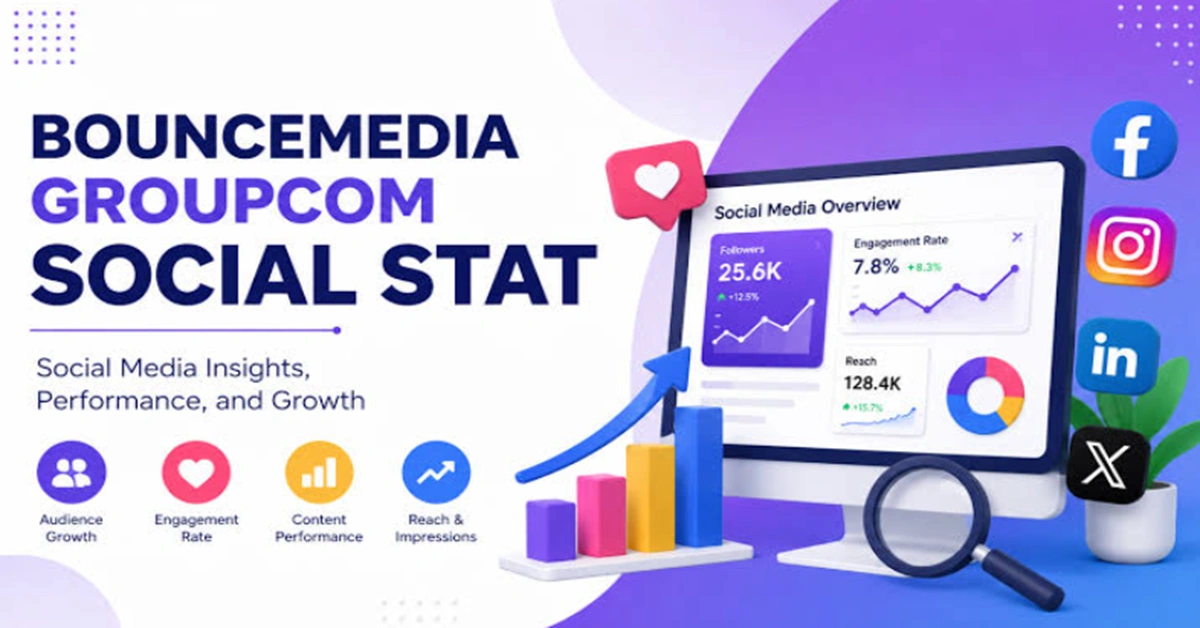
In today’s digital world, social media plays a vital role in the success of businesses, brands, and content creators. Companies use platforms such as Facebook, Instagram, LinkedIn, TikTok, and X (formerly Twitter) to connect with audiences and promote their products or services. To measure the effectiveness of these efforts, social media statistics are essential. Bouncemediagroupcom social statrefers to the analysis and presentation of social media performance data that helps businesses understand audience engagement, reach, growth, and overall digital success.
Social media statistics provide valuable insights into how users interact with content. Instead of relying on assumptions, businesses can use data-driven information to improve marketing strategies and achieve better results. By studying engagement rates, follower growth, impressions, and conversions, organizations can identify strengths and areas that need improvement.
Why Social Media Statistics Matter
Social media statistics are important because they reveal how audiences respond to content. Every like, comment, share, and click represents user interest and engagement. These interactions help businesses understand what type of content resonates most with their target audience.
For example, if a company notices that video content receives significantly more engagement than image posts, it can focus more on creating videos. Similarly, statistics can show the best times to post, helping brands reach a larger audience and maximize engagement.
Another benefit of Bouncemediagroupcom social stat is improved decision-making. Businesses can allocate their marketing budgets more effectively when they know which campaigns generate the highest return on investment. This reduces wasted resources and increases overall marketing efficiency.
Key Components of Bouncemediagroupcom Social Stat
A social statistics report typically includes several important metrics that measure different aspects of performance. These metrics help marketers understand audience behavior and campaign effectiveness.
Audience Reach
Reach indicates the number of unique users who have seen a piece of content. A higher reach means that content is being exposed to a larger audience, increasing brand awareness.
Impressions
Impressions represent the total number of times content appears on users’ screens. Unlike reach, impressions can include multiple views from the same user.
Engagement
Engagement includes likes, comments, shares, saves, and other interactions. High engagement often indicates that the audience finds the content valuable and interesting.
Follower Growth
Follower growth measures how quickly an account gains new followers. Consistent growth is usually a sign of successful content and effective marketing efforts.
Conversion Rate
Conversion rate tracks the percentage of users who complete a desired action, such as making a purchase, signing up for a newsletter, or downloading a resource.
Bouncemediagroupcom Social Stat Table Explained
The following table explains some of the most important social media metrics and their significance:
| Metric | Definition | Why It Matters |
|---|---|---|
| Reach | Number of unique users who viewed content | Measures audience exposure and brand visibility |
| Impressions | Total number of content views | Shows how often content is displayed |
| Likes | Positive reactions from users | Indicates audience appreciation |
| Comments | User responses to content | Demonstrates engagement and interaction |
| Shares | Number of times content is shared | Expands reach and increases visibility |
| Engagement Rate | Percentage of users interacting with content | Measures content effectiveness |
| Followers | Total audience size | Reflects brand popularity |
| Follower Growth | Increase in followers over time | Shows account growth and audience interest |
| Click-Through Rate (CTR) | Percentage of users clicking links | Measures content’s ability to drive traffic |
| Conversion Rate | Percentage of users completing desired actions | Indicates business impact and campaign success |
How Businesses Use Social Statistics
Businesses use social statistics to make smarter marketing decisions. By analyzing performance data, they can identify successful campaigns and replicate effective strategies. Bouncemediagroupcom social stat also help marketers understand audience preferences and adjust content accordingly.
For instance, if a brand discovers that educational posts receive higher engagement than promotional content, it can create more informative posts. This approach helps build trust and maintain audience interest.
In addition, social media data assists with advertising campaigns. Marketers can evaluate which advertisements generate the highest engagement and conversions, allowing them to optimize future campaigns and improve results.
Benefits of Monitoring Social Media Metrics
Monitoring social media statistics offers numerous advantages. First, it helps businesses understand their audience better. Knowing who interacts with content and what they prefer allows brands to create more personalized experiences.
Second, social analytics improve content quality. By identifying top-performing posts, marketers can learn what works and develop more effective content strategies.
Third, statistics support business growth. Accurate data enables organizations to make informed decisions, improve customer relationships, and increase profitability.
Future of Social Media Analytics
The future of social media analytics is closely linked to advancements in technology. Artificial intelligence and machine learning are making data analysis faster and more accurate. These technologies can identify trends, predict audience behavior, and provide actionable recommendations.
Predictive analytics is also becoming increasingly important. Instead of simply reporting past performance, modern analytics tools can forecast future outcomes. This allows businesses to prepare strategies proactively and stay ahead of competitors.
As digital marketing continues to evolve, social media statistics will remain a critical resource for businesses seeking growth and success.
Conclusion
Bouncemediagroupcom social stat highlights the importance of understanding social media performance through meaningful data and analytics. By tracking metrics such as reach, impressions, engagement, follower growth, and conversion rates, businesses can gain valuable insights into audience behavior and marketing effectiveness.
The detailed statistics provided through social media analysis help organizations optimize content, improve engagement, and achieve better business results. As technology advances and analytics become more sophisticated, the role of social statistics in digital marketing will continue to grow, making them an essential tool for long-term success.